
On the ground, the operational realities are no less exacting. Every sortie cycle forces field crews and fleet engineers to manage fast-charge turnaround heat, cycle-life degradation and pouch swelling, thermal-runaway containment, and strict hazardous-materials transport mandates across air and road freight networks.
What Is a Drone Battery?
A drone battery is a rechargeable electrochemical pack supplying propulsion motors, avionics, and payloads across an unmanned aerial vehicle's flight envelope. Unlike stationary storage or consumer cells, a flight pack sits inside a strict aerodynamic feedback loop: every gram added for extra energy demands additional lift, raising propulsion power and eroding marginal endurance gains. On all-electric multirotors and vertical takeoff and landing (VTOL) aircraft, the battery pack typically accounts for the largest share of maximum takeoff weight. Pack selection is therefore a trade-off between gravimetric energy density (Wh/kg), which governs endurance, and specific power (W/kg), which determines lift margin and wind-rejection authority. Volumetric energy density (Wh/L) adds a geometric constraint in streamlined fixed-wing fuselages, where pack cross-section influences drag and center-of-gravity trim.
Battery Cell Chemistries and Cell Formats
UAV packs divide first by electrochemistry and physical enclosure, which govern internal resistance, discharge ceilings, energy density, and thermal stability.
| Chemistry and Format | Energy Density | Continuous C-Rate | Cycle Life | Enclosure | Primary Mission Fit |
|---|---|---|---|---|---|
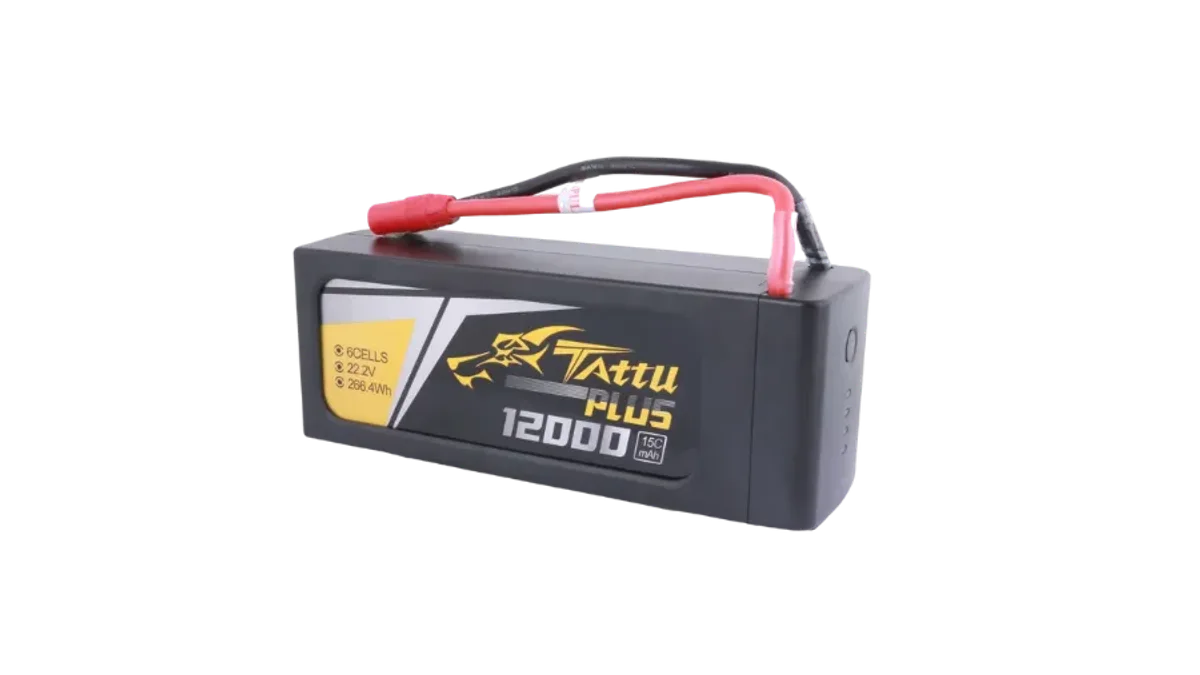
| LiPo / LiHV Pouch | Moderate Wh/kg; flexible Wh/L | Very high | Moderate (lower for LiHV) | Foil pouch | Heavy-lift multirotors, agriculture, VTOL |
| Cylindrical / Prismatic Li-Ion | High Wh/kg and Wh/L | Low to moderate | High under steady load | Rigid metal can | Long-endurance fixed-wing mapping |
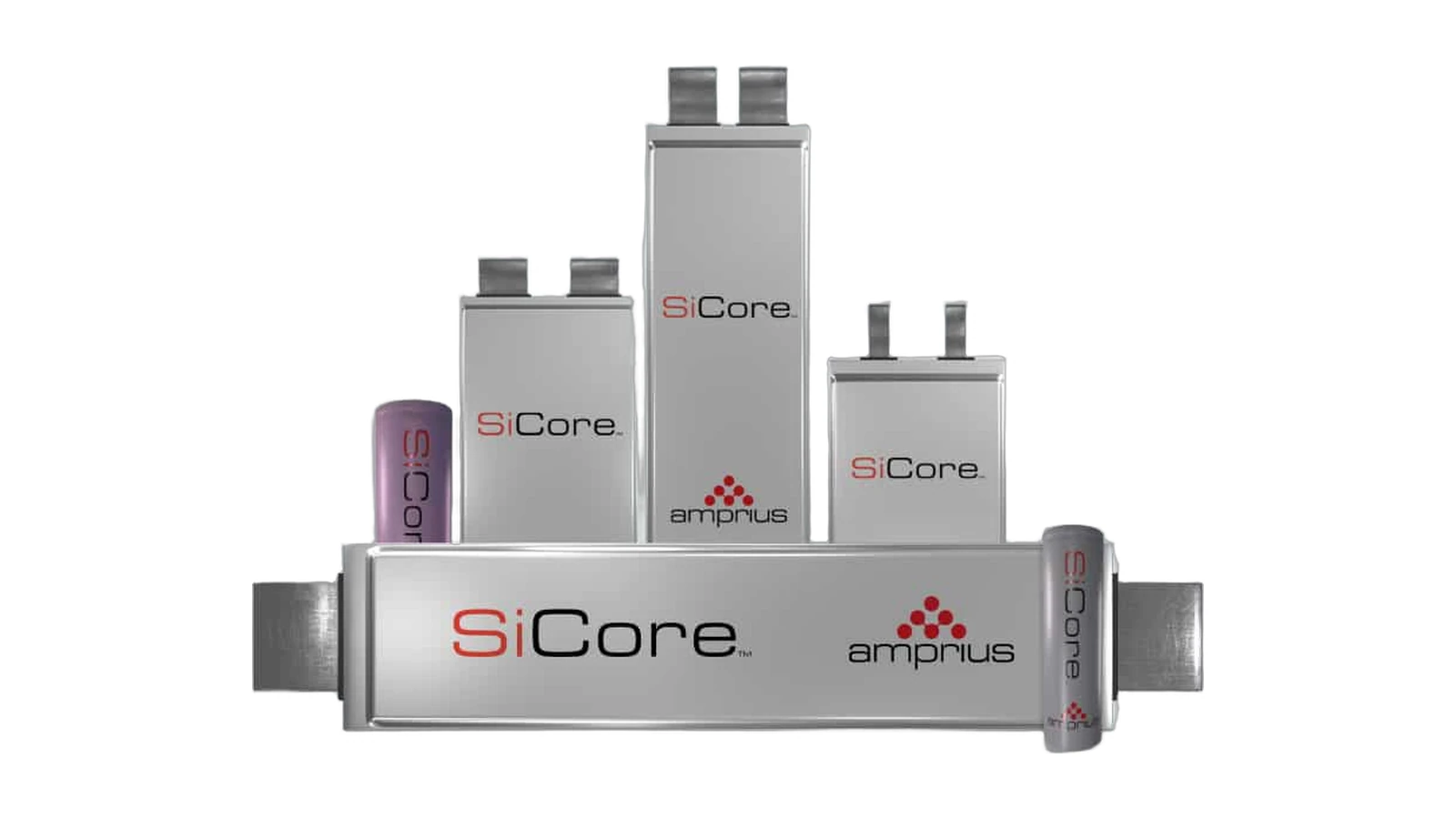
| Semi-Solid-State / Silicon-Anode | Very high Wh/kg and Wh/L | Moderate | Moderate; rate-sensitive | Pouch or hybrid shell | Extended-range industrial survey |
Lithium Polymer (LiPo) and High-Voltage LiPo (LiHV) Pouch Cells
Lithium polymer pouch cells stack flat electrode sheets separated by polymer membranes infused with gelled or liquid electrolytes inside an aluminum-laminated envelope. Because stacked planar electrodes shorten current paths and allow wide collector tabs, LiPo cells maintain very low direct-current internal resistance. Under heavy propulsion loads, low resistance suppresses instantaneous voltage sag (current times internal resistance) and Joule heating (current squared times internal resistance), making LiPo pouches standard on heavy-lift agricultural sprayers, cargo multirotors, and agile platforms needing rapid throttle transients.
High-voltage LiPo (LiHV) variants use modified cathodes and additives rated to 4.35 V or 4.40 V per cell instead of 4.20 V. Raising the upper cutoff boosts usable watt-hours without adding mass, though higher cathode potentials accelerate electrolyte oxidation, gas generation, pouch swelling, and capacity fade if packs rest fully charged.
Cylindrical and Prismatic Lithium-Ion (Li-Ion) Cells
Cylindrical lithium-ion cells—commonly 18650 and 21700 formats—wind electrode and separator strips into a jelly roll inside a rigid metal can, whereas prismatic cells fold electrodes within a hard rectangular shell. Compared with soft LiPo pouches, high-energy cylindrical cells offer superior gravimetric energy density (Wh/kg), strong volumetric packing efficiency, built-in pressure vents, and mechanical protection against puncture and vibration abrasion.
However, wound geometry and narrower tabs create higher internal resistance than stacked high-rate pouches. Under sustained high-C discharge, cylindrical Li-ion packs suffer steeper voltage sag and core heating, constraining usable capacity before low-voltage cutoffs trip. They excel on efficient fixed-wing mapping UAVs and light inspection multirotors operating at steady, moderate cruise currents.
Semi-Solid-State and High-Energy-Density Silicon-Anode Packs
Long-endurance industrial UAV programs increasingly deploy silicon-carbon anode and semi-solid-state electrolyte packs to push gravimetric energy density beyond conventional graphite-anode cells. Blending silicon into the anode substantially raises lithium-storage capacity, while hybrid gel or solid-liquid electrolytes cut free liquid solvent and stabilize electrode interfaces. Field teams gain higher pack-level Wh/kg, extending corridor inspection and mapping flights without enlarging the airframe.
These gains entail concrete operational trade-offs. Silicon undergoes significant volumetric expansion during lithiation, stressing the solid-electrolyte interphase (SEI) and often reducing cycle life under deep discharge compared with mature graphite cells. Unit costs remain higher, continuous discharge C-rates are typically more conservative than performance LiPo pouches, and elevated sub-zero internal impedance narrows cold-weather margins without preheating.
Pack Integration Models: Standard Non-Smart Packs vs. Smart Battery Ecosystems
Orthogonal to cell chemistry, flight packs split into open passive assemblies and proprietary smart modules; either format can house LiPo, Li-ion, or semi-solid-state cells.
Standard Non-Smart Packs
Standard non-smart packs expose the cell stack through a heavy-gauge main power harness—fitted with high-current, anti-spark connectors such as XT60, XT90-S, or AS150—paired with a separate balance lead wired to each series tap. Omitting onboard control boards and vendor handshakes yields cross-platform compatibility, lower cost per watt-hour, and simple field serviceability for custom airframes. The trade-off is crew discipline: operators must manually check cell balance, maintain storage voltage, monitor temperature, and track cycles externally.
Smart and Brand-Specific Battery Packs
Smart packs integrate monitoring electronics inside a rigid housing with keyed quick-release latches and combined power-data contacts. While underlying balancing topologies, state-of-charge algorithms, and communication buses belong to dedicated battery management system engineering, pack-level automation simplifies enterprise operations. Smart modules automatically self-discharge toward storage voltage during idle periods, log cycles and thermal faults, report remaining energy to the flight controller, and power built-in resistive heating films for sub-zero operation. Their main drawback is vendor lock-in: proprietary protocols and housings prevent cross-fleet sharing and raise long-term consumable costs.
Key Specifications Buyers Need to Read Correctly
Specifying a flight pack from one headline metric often causes powertrain mismatches, endurance shortfalls, or shipping violations.
Capacity (mAh / Ah) vs. Total Energy (Wh) and Energy Density (Wh/kg)
Milliampere-hours (mAh) and ampere-hours (Ah) quantify electric charge, not stored energy. Comparing packs across different voltages by mAh alone misleads buyers because total energy equals charge times nominal voltage (Wh = Ah × V). A 16,000 mAh 6S pack (22.2 V nominal) holds roughly 355 Wh, whereas a 12,000 mAh 12S pack (44.4 V nominal) holds about 533 Wh—fifty percent more energy despite a lower mAh label. Buyers must compare total watt-hours for mission energy and aviation shipping limits, then divide total watt-hours by complete pack mass—including casing, wiring, and connectors—to evaluate true pack-level gravimetric energy density (Wh/kg).
Nominal and Maximum Voltage and Series-Parallel Configuration ("S" and "P" Ratings)
Pack topology uses series ("S") and parallel ("P") ratings, such as 6S, 12S, 14S, or 6S3P. Series cells sum voltage at fixed capacity; parallel strings sum capacity and current capability at fixed voltage. High-power commercial UAVs adopt 12S or 14S buses because doubling voltage halves current for equal power, cutting resistive wiring losses fourfold and allowing lighter conductors. Operators must distinguish full-charge cutoff (4.20 V per cell for standard lithium chemistries), nominal voltage (3.6 V to 3.8 V), and loaded cutoff floor. Because internal resistance depresses voltage under load, over-discharging risks irreversible anode damage, whereas overly high cutoffs strand usable capacity.
Discharge and Charge C-Ratings
A C-rating expresses allowable current relative to nominal ampere-hour capacity, so maximum continuous discharge equals Ah times the continuous C-rating. A 10 Ah pack rated at 15C continuous can theoretically deliver 150 A, though sustained draw near limits accelerates heating and voltage droop without strong airflow. Charge C-ratings govern field turnaround. Standard 1C charging restores a depleted pack in roughly one hour while preserving longevity. Agricultural and dock fleets often use 2C to 5C rapid charging to shrink pack inventories, trading longevity against anode polarization and metallic lithium-plating risks if cell temperatures exceed safe bounds.
Operational Matching, Care, Safety, and Hazmat Transport
Pack longevity and safety hinge on matching cell architecture to flight profiles, thermal discipline, and dangerous-goods compliance.
Matching Battery Packs to Aircraft Profiles
Heavy-lift agricultural sprayers endure intense takeoff currents and rapid turnaround, pairing high-discharge LiPo packs with multi-channel smart charging hubs and air- or liquid-cooled field rapid chargers that shed cell heat between sorties. Fixed-wing mapping airframes see brief launch spikes followed by steady cruise, favoring high-Wh/kg cylindrical Li-ion or semi-solid-state packs. Cold-climate inspection platforms rely on wide-temperature cells with self-heating films to preserve voltage headroom. Autonomous drone-in-a-box docks face continuous weather exposure and frequent recharges, prioritizing thermal conditioning, cycle durability, and automated health tracking over peak gravimetric density.
Storage Voltage, Cycle Degradation, Cold-Weather Derating, and Retirement Criteria
Lithium cells age via SEI thickening, active lithium loss, cathode oxidation, and rising internal resistance. Storing packs fully charged in heat accelerates gas evolution and capacity fade; idle packs should rest near storage voltage—typically 3.80 V to 3.85 V per cell—in cool, dry storage. Conversely, cold temperatures slow lithium-ion diffusion kinetics, spiking internal impedance. Launching an unheated pack in freezing air invites severe cold-weather voltage sag during climb, triggering premature low-voltage failsafes or forced landings; packs require thermal preheating before flight and cooling before recharge.
Clear retirement rules prevent in-flight failures and fires. Crews must retire packs showing pouch swelling, crushed cans, persistent post-rest cell voltage divergence, sharp impedance rise, or abnormal heating under standard charging. Enterprise fleets log serial-numbered cycle counts and resistance trends in fleet management software to retire aging packs predictably.
Thermal Runaway Containment, Charging Cabinets, and Air/Road Transport Compliance (UN 38.3 / IATA)
When internal shorts, overcharging, mechanical impact, or excessive heat breach the separator, exothermic cathode decomposition releases oxygen and flammable vapors, driving cascading thermal runaway across cells. Warehouses and field units therefore use fire-rated, vented charging cabinets, non-combustible surfaces, and certified flame-retardant transport cases that suppress flame jetting and filter toxic fumes.
Shipping industrial UAV packs by air or across borders triggers strict hazmat rules. Every lithium battery design must pass UN 38.3 testing—covering altitude simulation, thermal cycling, vibration, shock, short circuit, impact, overcharge, and forced discharge. Under International Air Transport Association (IATA) dangerous-goods tiers, packs up to 100 Wh face minimal cabin restrictions, packs from 100 Wh to 160 Wh require airline approval in limited quantities, and packs above 160 Wh—most industrial flight packs—are barred from passenger aircraft and must ship via cargo-aircraft-only hazmat logistics or ground freight at reduced state of charge. Operators must verify current annual dangerous-goods regulations before dispatch.
Synonyms and Related Power Terms
Industry documentation refers to drone batteries as UAV battery packs, flight packs, propulsion batteries, or by chemistry shorthand such as LiPo, LiHV, and Li-ion. All denote sealed, rechargeable secondary electrochemical packs carried onboard. They differ from tethered ground power systems, which send continuous electricity up an umbilical cable, and from liquid fuel tanks feeding combustion engines. Hydrogen fuel cell systems are likewise distinct: rather than storing electricity reversibly inside electrodes, a fuel cell stack continuously generates power by reacting stored hydrogen with ambient oxygen, often pairing with a small buffer battery for transient peak loads.