
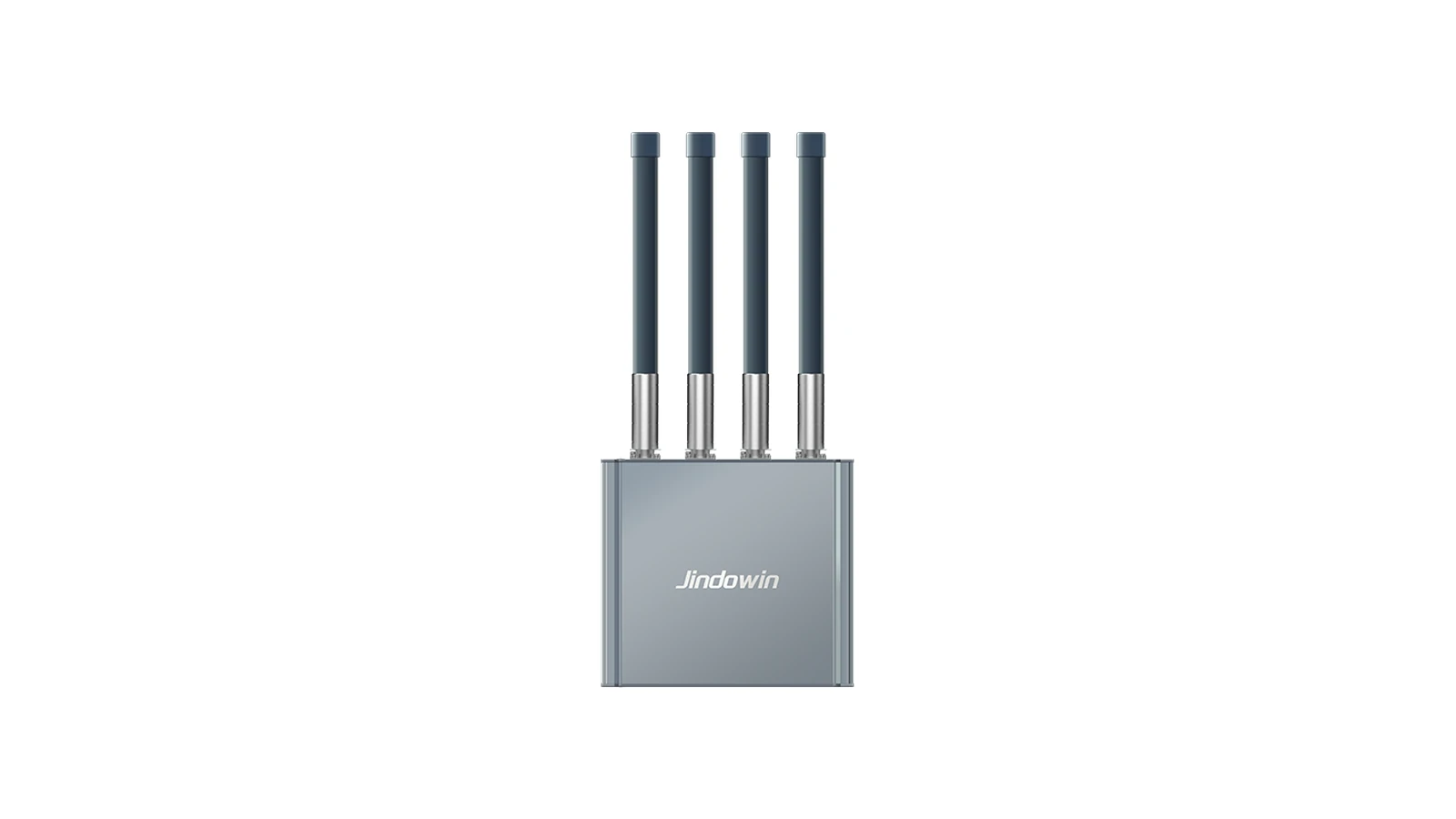
New OEM platforms take the opposite approach, moving from external workarounds to purpose-built subsystem integration. By embedding tamper-resistant identification hardware directly into flight-control telemetry buses, production aircraft enforce pre-arm health checks and unlock broader operational approvals.
What Is a Drone Remote ID Module?
A drone Remote ID module is a dedicated onboard radio-frequency transmitter that broadcasts an uncrewed aircraft's identity, position, velocity, and status over unlicensed local spectrum. Functioning as a real-time digital license plate, it lets authorities and ground receivers identify airborne platforms without cellular networks or centralized databases. While newer commercial aircraft increasingly integrate identification radios at the factory, standalone and embedded Remote ID modules serve two core markets: retrofitting legacy, homebuilt, or custom industrial airframes, and supplying pre-certified radio assemblies to manufacturers integrating compliance into new production lines.
Three identification architectures define global regulation, and their boundaries matter operationally. Standard Built-In Remote ID—termed Direct Remote ID in Europe—is factory-integrated into the flight controller and power bus, pairing tamper-resistant firmware with pre-arm health verification. Standalone Add-On Broadcast Modules are self-contained external pods mounted onto existing airframes with their own satellite receiver and battery. Network Remote ID operates differently altogether: instead of local RF beacons, the aircraft or ground station streams telemetry over cellular links to an unmanned traffic management service supplier. Although network reporting supports wide-area coordination, local broadcast hardware remains the baseline compliance mandate because it functions without subscriptions or mobile coverage. Crucially, external broadcast modules are not regulatory equivalents to built-in systems: because an isolated pod cannot read a moving pilot's controller coordinates, regulators enforce tighter limits on add-on modules, notably barring them from routine Beyond Visual Line of Sight operations.
How Remote ID Modules Work
Compliance-grade modules convert satellite navigation fixes and aircraft metadata into standardized plaintext radio packets from power-on through landing.
Broadcast Data Fields and Local RF Protocols
Under the two principal international specifications—ASTM F3411 and ASD-STAN prEN 4709-002—every module broadcasts a mandatory plaintext telemetry payload at defined intervals. Required fields include the module's unique serial number or session identifier, live latitude, longitude, geometric or barometric altitude, ground speed, vertical velocity, heading, timestamp, and operational or emergency status flags. The decisive distinction lies in the reference-location field: factory-integrated systems transmit the remote pilot's live ground control station coordinates, whereas standalone add-on modules broadcast only the aircraft's static takeoff point because an uncoupled pod has no data link to the operator's handset.
To enable direct reception by smartphones, tablets, and ground monitors, modules broadcast over unlicensed 2.4 GHz and 5 GHz bands via Bluetooth or Wi-Fi—requiring no SIM card, carrier plan, or internet connection. Bluetooth 4 Legacy Advertising maximizes compatibility with older handsets, though tight payload limits require multi-packet fragmentation and restrict range. Bluetooth 5 Long Range overcomes link-budget limits via Coded PHY forward error correction, extending air-to-ground reception distances substantially at lower data rates on compatible chipsets. Wi-Fi Neighbor Awareness Networking (NAN) and Wi-Fi Beacon frames carry full identification sets in single cycles at higher effective radiated power, though mobile operating-system background-scanning restrictions can limit reception consistency on certain consumer smartphones compared to dedicated receivers.
Self-Contained Retrofit Hardware vs. Embedded OEM Modules
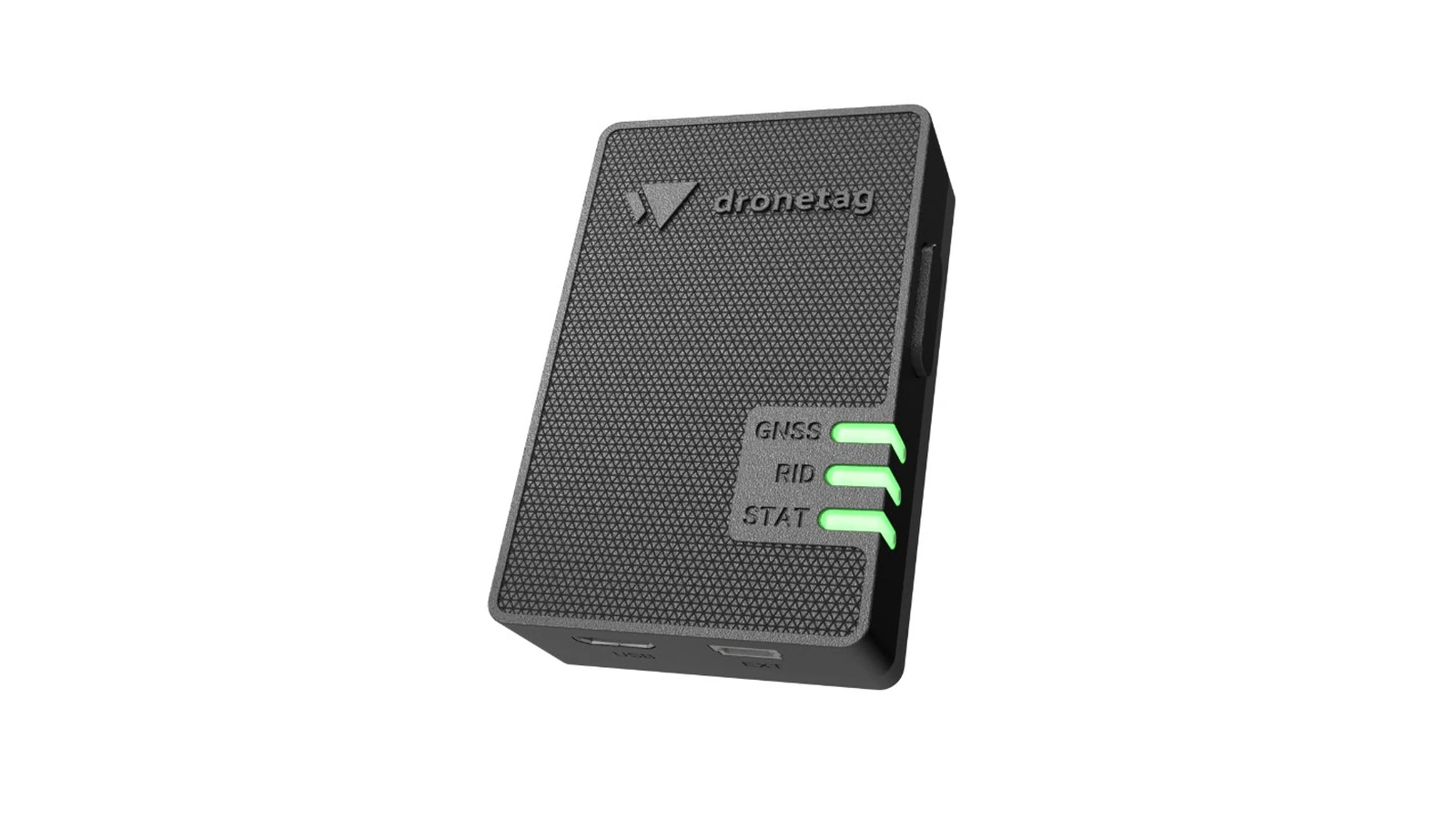
The hardware market splits into two distinct tiers serving fleet operators and drone manufacturers. Self-contained retrofit pods enclose a miniature GNSS receiver with a ceramic patch antenna, a Bluetooth or Wi-Fi transceiver, a status LED, and a rechargeable battery inside a lightweight weather-resistant shell. Attached externally with hook-and-loop straps, adhesive pads, or quick-release clips, they require no airframe wiring and transfer easily between drones. Their simplicity imposes a functional ceiling: isolated from the autopilot, a standalone pod cannot block takeoff during faults or report real-time control station movement.
Embedded OEM avionics modules serve manufacturers and integrators building production airframes around commercial flight controllers or open-source stacks like ArduPilot and PX4. Supplied as bare circuit boards or compact cased assemblies, these units interface via UART (MAVLink) or DroneCAN to draw regulated aircraft power and ingest live navigation, barometric, and ground-control telemetry. Bidirectional autopilot communication enables tamper-resistant firmware locks and mandatory pre-arm self-tests that inhibit motor arming whenever the radio fails, firmware integrity breaks, or GNSS lock is missing—allowing OEMs to qualify new platforms under Standard Built-In Remote ID declarations rather than add-on rules.
| Engineering & Regulatory Attribute | Standalone Add-On Broadcast Module | Embedded OEM / Standard Built-In Module |
|---|---|---|
| Power & Avionics Interface | Self-contained battery and GNSS; external mount with zero autopilot wiring | Aircraft bus power via UART (MAVLink) or DroneCAN; direct autopilot link |
| Reference Location Broadcast | Fixed takeoff point captured onboard prior to launch | Real-time ground control station location via the command link |
| Pre-Arm Interlock | Independent LED check only; cannot block host motor arming | Firmware pre-arm self-test inhibits takeoff on RF or GNSS fault |
| Airspace & BVLOS Scope | Restricted primarily to Visual Line of Sight operations | Eligible for broader approvals, including BVLOS waivers |
| Fleet Transferability | Reassignable across multiple drones under compliant fleet registration | Permanently bound to one certified aircraft serial number |
Operational Use Cases and Global Regulatory Frameworks
Broadcast modules reconcile tightening airspace mandates with the multi-year capital lifecycle of industrial fleets, though approval registries and operational privileges differ across jurisdictions.
Retrofitting Legacy Fleets, Custom Industrial Rigs, and Research/FPV Builds
Enterprise teams operating pre-mandate mapping, utility inspection, and agricultural drones rely on standalone broadcast modules to maintain legal airspace access without retiring airworthy fleets prematurely. Equally dependent is the custom-integration sector: academic aerospace labs, industrial R&D testbeds, heavy-lift payload platforms, and commercial first-person-view cinematography rigs undergo constant hardware modification that makes full aircraft-level type certification impractical. Mounting a certified add-on transmitter—or wiring an OEM DroneCAN module into a custom autopilot stack—delivers rapid regulatory compliance without redesigning core flight avionics.
United States: FAA Part 89 Broadcast Module Rules and VLOS Limits
Under FAA 14 CFR Part 89, manufacturers must validate broadcast modules against an FAA-accepted Means of Compliance and secure an active Declaration of Compliance (DoC) in the agency's official public registry. For commercial Part 107 operators, add-on modules provide valuable fleet flexibility: one registered module serial number can be moved among multiple legacy aircraft associated with the same commercial registration account, lowering retrofit costs. However, Part 89 draws a hard operational line rooted in telemetry architecture. Because a standalone module cannot track a moving pilot—such as one operating from a vehicle—and transmits only its recorded takeoff coordinates, aircraft relying on add-on modules are confined strictly to Visual Line of Sight (VLOS) operations. Operators pursuing Beyond Visual Line of Sight waivers must instead deploy Standard Built-In Remote ID aircraft or qualify custom builds with integrated OEM avionics modules.
Singapore: CAAS Broadcast Remote ID Requirements
In the Asia-Pacific region, the Civil Aviation Authority of Singapore (CAAS) mandates Broadcast Remote ID (B-RID) capability for unmanned aircraft exceeding designated takeoff weight thresholds operating in Singapore's airspace. Within a dense metropolitan environment where commercial infrastructure intersects active low-altitude manned aviation corridors, local RF broadcasting gives enforcement agencies immediate, infrastructure-independent aircraft attribution. Compliance requires either a built-in transmitter or an approved external B-RID module meeting recognized standards alongside valid registration. Because weight exemptions, transition schedules, and approved equipment lists are updated periodically, operators must verify module eligibility against live CAAS regulatory circulars prior to deployment.
European Union: EASA Direct Remote ID and Other Major Jurisdictions
Across Europe, the European Union Aviation Safety Agency (EASA) enforces Direct Remote ID under ASD-STAN prEN 4709-002, tying native broadcast hardware to class-marked aircraft (C-class) in the Open category and Specific-category operations while permitting certified add-on modules for legacy or privately built drones. Crucially, European rules require operators to upload their unique UAS Operator Registration Number into the module's firmware before flight, separating operator accountability from hardware serial numbers. In Asia-Pacific, Japan's Civil Aviation Bureau (MLIT) enforces parallel Remote ID requirements for registered aircraft above statutory mass limits, supporting both built-in transmitters and approved external units linked to national flight authorization systems. For multinational fleets and export-oriented OEMs, dual compliance across ASTM F3411 and ASD-STAN prEN 4709-002 packet schemas has become an essential procurement baseline.
Hardware Selection and Airframe Integration Pitfalls
Procurement demands verification well beyond confirming that a module powers on and transmits Bluetooth frames. The most common compliance failure is buying unapproved hardware omitted from the destination jurisdiction's official registry—such as the FAA DoC list, CAAS compliance notices, or EU conformity declarations—or lacking firmware support for regional fields like European operator registration uploads. Power and mass engineering matter equally: internal lithium cells in standalone pods lose capacity rapidly in cold-weather field inspections, requiring endurance margins matched to multi-battery sorties or bus-powered OEM alternatives, while even twenty to forty grams of external mass can disturb center-of-gravity trim on lightweight sub-kilogram airframes.
In field deployment, electromagnetic compatibility is the primary technical failure mode. Compact pods depend on ceramic patch GNSS antennas requiring unobstructed upper-hemisphere sky view. Mounting a unit beneath conductive carbon-fiber plates, inside composite shells, or beside high-current power distribution boards attenuates satellite reception and elevates RF noise. Placing the module beside high-power 5.8 GHz video transmitters, telemetry links, or cellular modems routinely induces GNSS desense, blocking satellite lock and shrinking broadcast range below statutory minimums. On DroneCAN-integrated platforms, poor placement triggers persistent pre-arm self-test lockouts that ground aircraft on launch pads. Engineers should mount modules on non-conductive top surfaces with clear sky visibility, maximize separation from high-power antennas, and confirm live packet decoding on a ground receiver before field operations.
Common Synonyms, Technical Standards, and Related Systems
Across aviation circulars, procurement tenders, and avionics documentation, these transmitters appear under several common designations: Remote ID broadcast module, RID module or B-RID module (widely used in Asia-Pacific rules), external Remote ID transmitter or retrofit Remote ID module, and Open Drone ID module. Separating standards from software prevents specification mistakes. ASTM F3411 and ASD-STAN prEN 4709-002 define the legally binding RF framing, update intervals, and telemetry schemas required for airspace approval. Open Drone ID, conversely, is an open-source reference protocol implementation and firmware stack built around those consensus standards; hardware vendors frequently adopt Open Drone ID libraries to accelerate development, though open-source compatibility alone never substitutes for formal regulatory testing and declaration.
Within broader low-altitude airspace architecture, Remote ID modules provide the foundational cooperative signaling layer linking security and traffic systems. Counter-UAS detection receivers protecting airports, utilities, and venues continuously scan Bluetooth and Wi-Fi bands for broadcast frames, letting operators whitelist authorized flights immediately while isolating uncooperative intruders. Concurrently, ground receiver networks ingest local broadcasts into unmanned traffic management platforms alongside cellular identification streams, uniting local attribution with wide-area situational awareness.