
Public safety aviation units cannot stake responder survival or crisis containment on fair-weather consumer gear adapted for recreational photography. Operating decisively across high-risk emergencies demands hardened tactical airframes built for sub-minute vehicle deployment, pairing encrypted multi-sensor overwatch, all-weather ingress protection, and interference-resistant radio links with strict air-gapped data governance and courtroom-grade evidentiary accountability.
What Is a Public Safety Drone?
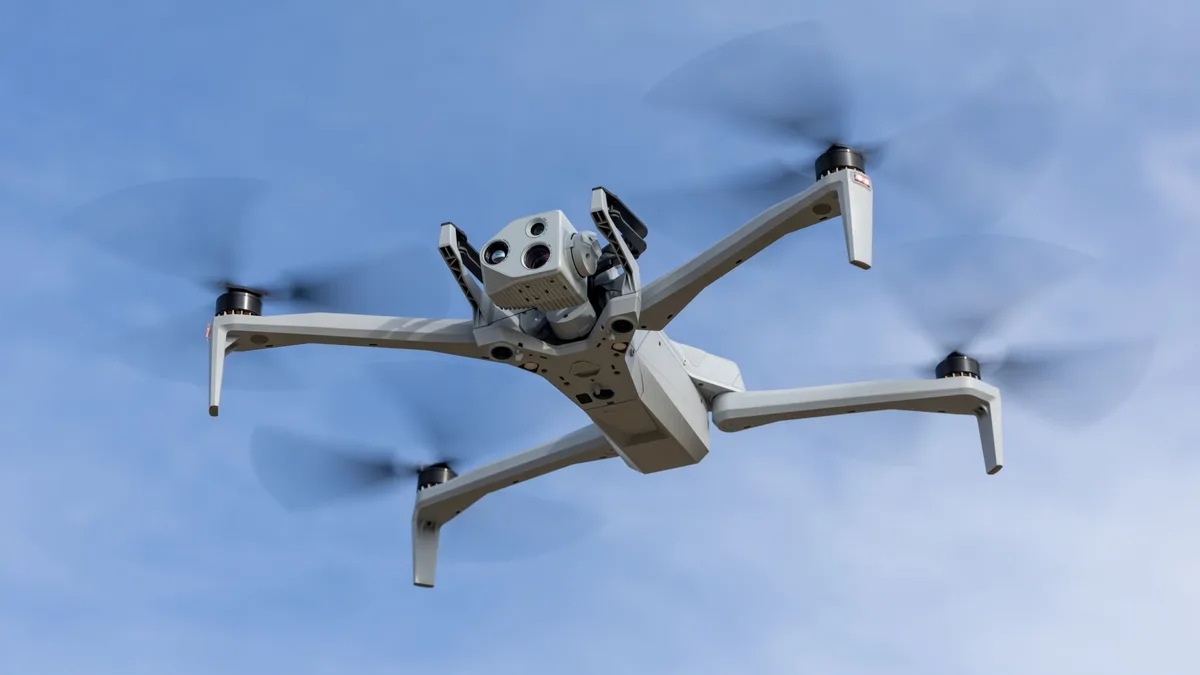
A public safety drone is a mission-critical unmanned aircraft system engineered specifically for law enforcement, emergency management, fire support, hazardous materials teams, and civil protection agencies operating in life-safety environments. Unlike consumer quadcopters or general commercial inspection aircraft, these platforms are built around deterministic field reliability when seconds separate containment from escalation. Agency procurement officers and tactical flight units evaluate candidate airframes against four uncompromising engineering thresholds: sub-minute cold-boot deployment from a patrol vehicle trunk, dependable day-and-night video transmission, physical survivability under severe weather and dense urban electromagnetic interference, and end-to-end cryptographic link security.
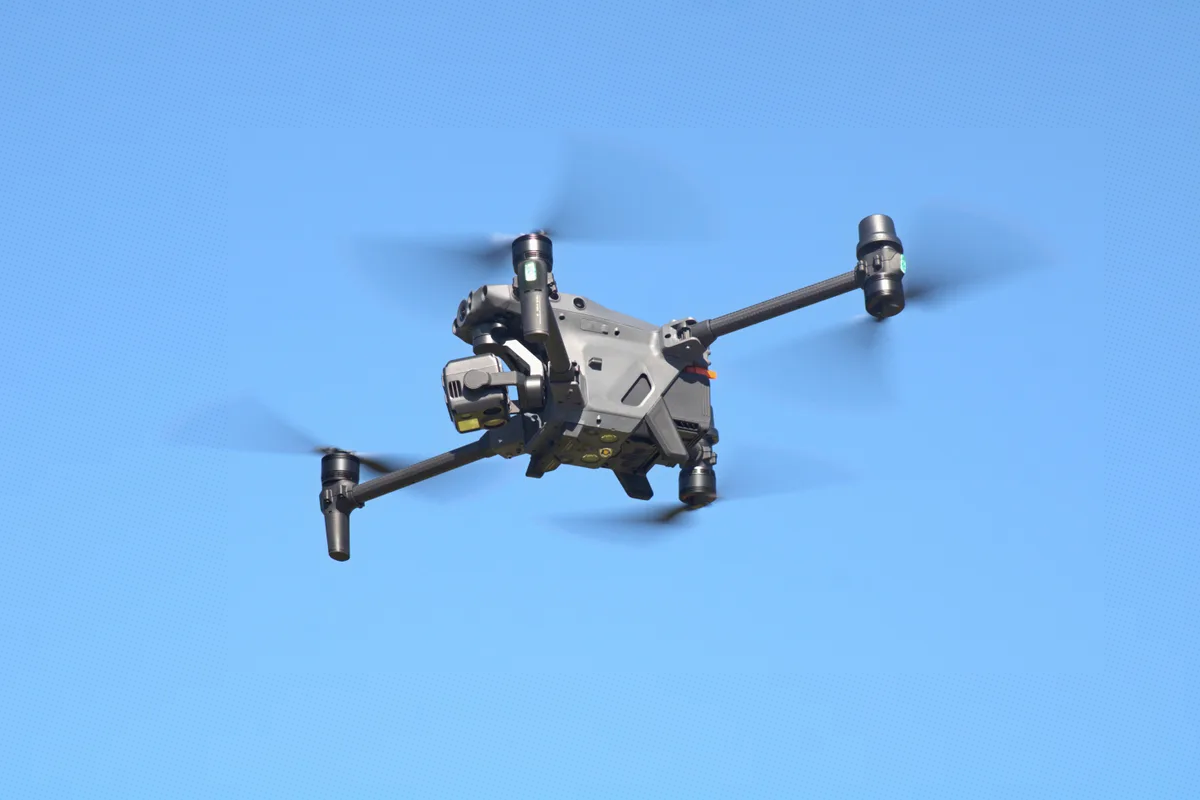
Operationally, a public safety drone functions as a rapidly deployable aerial intelligence node rather than a simple flying camera. Police precincts, sheriff departments, and emergency operations centers deploy these systems to establish overhead situational awareness before personnel enter unverified perimeters, hazardous plumes, or darkened buildings. Hardware in this class prioritizes ingress-protected enclosures, redundant flight controllers, frequency-hopping links resistant to metropolitan radio clutter, and quick-release payload interfaces. Because first responder missions span routine highway investigations, high-risk warrant service, and disaster coordination, agencies procure tiered fleets that balance indoor tactical agility with sustained all-weather endurance.
Agency Platform Tiers: From Indoor Tactical Micro-Drones to Heavy Overwatch UAS
Modern emergency agencies no longer rely on a single mid-size multirotor for every mission. Field engineering imposes sharp physical trade-offs between confined-space maneuverability, rapid cruiser portability, and multi-hour atmospheric endurance. Mature public safety aviation units therefore structure fleets across three distinct hardware tiers aligned with deployment speed, operating environment, and payload mass.
| Platform Tier | Form Factor & Protection | Primary Sensor Focus | Power & Endurance | Core Tactical Role |
|---|---|---|---|---|
| Indoor Tactical Micro-Drones | Palm-sized to sub-kilogram; shrouded prop guards, crash-tolerant cage | Wide low-light EO, micro-thermal, two-way audio | Short-burst swappable packs for interior sorties | SWAT room clearing, hostage negotiation, subterranean sweeps |
| Patrol-Deployable Multirotors | Foldable trunk-stowed chassis; moderate ingress sealing | Dual EO zoom, thermal imager, laser rangefinder | Rapid-swap self-heating batteries for tactical hops | Patrol overwatch, night perimeter containment, crash mapping |
| Heavy-Duty, Tethered & Docked UAS | Rigid multi-mount frame; high wind/rain sealing or weatherproof docks | Multi-gimbal EO/IR, spotlights, radio relays | Dual hot-swap packs, ground tether, or auto-charging dock | Storm reconnaissance, multi-hour crowd overwatch, rapid docked dispatch |
Sub-Compact Indoor Tactical and Negotiations Drones
SWAT and crisis negotiation units deploy sub-compact indoor drones built to navigate doorways, stairwells, and cluttered interiors without satellite navigation. Because structures block GPS and generate turbulent rotor wash, these micro-airframes incorporate full propeller shrouds, impact-absorbing cages, and self-righting modes that flip an inverted aircraft upright after contact. Payloads favor wide-angle low-light optics and compact thermal sensors capable of detecting concealed occupants in total darkness, paired with two-way microphones and speakers. This acoustic link lets negotiators communicate directly with barricaded suspects or hostages while keeping officers behind hard cover during pre-entry clearance.
Patrol-Deployable Rapid-Response Multirotors
Forming the daily backbone of municipal public safety programs, patrol-deployable multirotors prioritize sub-minute trunk-to-air readiness. Foldable airframes stow cleanly inside patrol trunks or command vehicles, enabling a solo officer to unfold the arms, cold-boot avionics, acquire satellite lock, and launch within sixty seconds. Engineering emphasis centers on single-operator controller ergonomics, self-heating batteries for freezing climates, and integrated multi-sensor gimbals that eliminate field assembly delays. With strong wind resistance and weather sealing, patrol-tier aircraft bridge the gap between initial dispatch arrival and aviation support, providing immediate thermal perimeter scans and overhead suspect tracking.
Heavy-Duty All-Weather, Tethered Overwatch, and Automated Dock Platforms
At the top tier sit high-payload, all-weather multirotors built for heavy rain, gusting winds, and temperature extremes that ground lighter units. Dual hot-swappable batteries and high ingress sealing support multi-sensor gimbals alongside spotlights or radio relays. For static multi-hour incidents such as large public gatherings or command-post overwatch, agencies pair heavy airframes with ground power and fiber-optic tethers, trading range for continuous airborne persistence and jam-resistant backhaul. Many agencies also supplement vehicle-borne fleets with rooftop automated docking stations; the operational workflows and beyond-visual-line-of-sight airspace architectures of Drone as First Responder networks form a dedicated discipline.
Mission-Critical Payloads and Tactical Accessories
An emergency airframe delivers field value strictly through the sensors and accessories locked onto its payload ports. The baseline imaging package across outdoor public safety fleets is a stabilized multi-sensor gimbal uniting a high-magnification electro-optical zoom camera, a long-wave infrared thermal core, and an integrated laser rangefinder. Optical zoom lets officers verify license plates, inspect suspicious packages, or assess whether a subject is armed from standoff altitudes that maintain acoustic discretion. Thermal imaging cuts through darkness, foliage, and light smoke to expose body heat signatures, recently driven vehicle engines, and discarded evidence. Critically, the co-aligned laser rangefinder turns passive video into actionable spatial intelligence: lasing a suspect, stranded civilian, or hazard perimeter calculates exact pinpoint geolocation coordinates and pushes street-level latitude and longitude directly to responding ground units.
Modular tactical accessories extend drones from passive observers into active force multipliers. High-lumen gimbaled LED spotlights track synchronously with the primary camera to illuminate alleys, crime perimeters, or rescue corridors without silhouetting officers on foot. Directional high-decibel loudspeakers—operating as compact airborne acoustic hailing devices—allow commanders to issue dispersal instructions, direct lost individuals toward rescuers, or broadcast emergency warnings over wide zones. Remote-actuated payload drop hooks deliver inflatable flotation devices, emergency two-way radios, or medical kits into inaccessible terrain. During cellular outages or remote dead-zone operations, heavy-lift platforms can also hoist encrypted mobile ad-hoc network relays aloft to restore resilient ground communications.
Core Public Safety Mission Domains
Public safety drones serve as shared municipal assets across emergency disciplines, though daily flight volume and budget justification vary by mandate. While wilderness search and high-heat fire suppression entail specialized aircraft architectures, law enforcement and comprehensive incident management account for the widest everyday utilization of general-purpose fleets.
Law Enforcement, Crime and Crash Scene Reconstruction, and Tactical Overwatch
Law enforcement agencies are the primary adopters of multi-tier public safety drone ecosystems, supporting both high-risk tactical calls and routine investigations. During felony stops, armed standoffs, and fugitive searches, overhead thermal overwatch replaces risky foot pursuits, enabling supervisors to track movement across rooftops and yards while positioning containment perimeters safely. At civic events and dignitary details, elevated optics monitor crowd density and flag anomalies before ground patrols spot them.
Equally decisive for municipal budget justification is rapid crash and crime scene reconstruction. Fatal highway collisions and complex outdoor crime scenes traditionally require investigators to close arterial roads for hours while gathering ground-based laser scans and total-station measurements. Automated photogrammetric grid flights capture complete high-resolution nadir and oblique datasets within minutes, producing courtroom-admissible orthomosaics and scaled three-dimensional reconstructions. Reopening major corridors hours sooner curbs regional traffic congestion and lowers secondary rear-end collision risks for first responders working near live lanes—delivering a measurable daily return on investment for municipal councils and oversight boards.
Firefighting Support and HazMat Reconnaissance
In fire and hazardous materials response, general-purpose public safety drones act as rapid size-up tools before crews enter dangerous atmospheres. Thermal multirotors penetrate smoke and nighttime haze to map roof fire spread, locate trapped occupants, and verify hidden hotspots during overhaul. During rail derailments, chemical leaks, or tanker spills, optical zoom payloads let HazMat teams read placards, inspect damaged valves, and track vapor plumes from upwind standoff distances. High-temperature airframes, chemical sniffer arrays, and active aerial suppression belong within specialized firefighting unmanned aircraft programs.
Search and Rescue Operations
When police or emergency managers search for missing elderly residents, lost children, or stranded hikers, patrol-deployable thermal drones compress initial sweeps from hours to minutes. Overhead grids clear fields, riverbanks, and tree lines rapidly, while drop hooks deliver blankets, radios, or medical kits until ground rescuers arrive. Extended wide-area wilderness grids, maritime endurance sorties, and cellular-homing beacon operations are addressed through dedicated search and rescue platforms.
Natural Disaster Assessment and Major Event Command
Following hurricanes, earthquakes, tornadoes, or flash floods, emergency management agencies deploy all-weather drones for rapid damage triage before roads reopen. Aerial crews inspect bridge stability, map flooded access routes, evaluate displaced civilian assembly sites, and guide utility restoration. During multi-agency disasters and major events, live airborne video streams into unified command posts to maintain a shared operating picture across police, fire, and medical leadership; the underlying computer-aided dispatch links, tactical mapping suites, and evidentiary video platforms form a specialized public safety software stack.
Government Procurement Hurdles: Cybersecurity, Supply-Chain Vetting, and Public Trust
Acquiring public safety drones entails rigorous institutional oversight focused on cybersecurity, supply-chain sovereignty, and community accountability. Because live tactical video often exposes officer locations, sensitive infrastructure, and private residences, procurement specifications routinely mandate AES-256 encryption across both wireless command-and-video links and onboard storage media. Equally essential is a verifiable local-data mode—an air-gapped operating state that disables external internet connections, halts background telemetry uploads to third-party servers, and keeps flight logs and evidentiary media exclusively within agency-controlled infrastructure.
Supply-chain vetting has also become a binding statutory gatekeeper. In the United States, federal grant rules and state procurement restrictions enforce National Defense Authorization Act compliance and vetted catalogs such as the Blue UAS framework, auditing the origin of flight controllers, radios, imaging sensors, and firmware pipelines. Comparable sovereign cybersecurity certifications govern European and allied municipal tenders, requiring hardware bills of materials and independent security audits before public funds are released.
Technical compliance alone cannot sustain an agency program without public trust. Leading departments anchor operations in transparent standard operating procedures published before deployment. Credible policies define clear warrant requirements for non-exigent surveillance over private property, prohibit routine indiscriminate patrolling, enforce strict retention schedules that purge non-evidentiary footage, and publish public flight logs detailing mission categories and locations.
Synonyms, Terminology Standards, and Related Public Safety Domains
Across agency tenders and regulatory documents, public safety drones are commonly termed Public Safety UAS, Public Safety UAVs, Emergency Response Drones, or First Responder Drones. While broader umbrella labels such as Unmanned Aerial Systems (UAS) and Unmanned Aerial Vehicles (UAVs) span the wider aviation sector, procurement teams should adhere to standard aerospace terminology. Hybrid phrasing like "Unmanned Aircraft Vehicles" occasionally appears in legacy drafts by conflating Unmanned Aircraft (UA) and Unmanned Aerial Vehicles (UAVs); formal grant proposals, policies, and bid specifications should standardize on Unmanned Aerial Vehicles (UAVs), Unmanned Aircraft (UA), or Unmanned Aircraft Systems (UAS) to match civil aviation authorities. Across the broader emergency aviation landscape, general-purpose agency fleets complement specialized domains covering wilderness and maritime search and rescue, dedicated firefighting platforms, automated Drone as First Responder dock networks, and dispatch-integrated public safety software.