
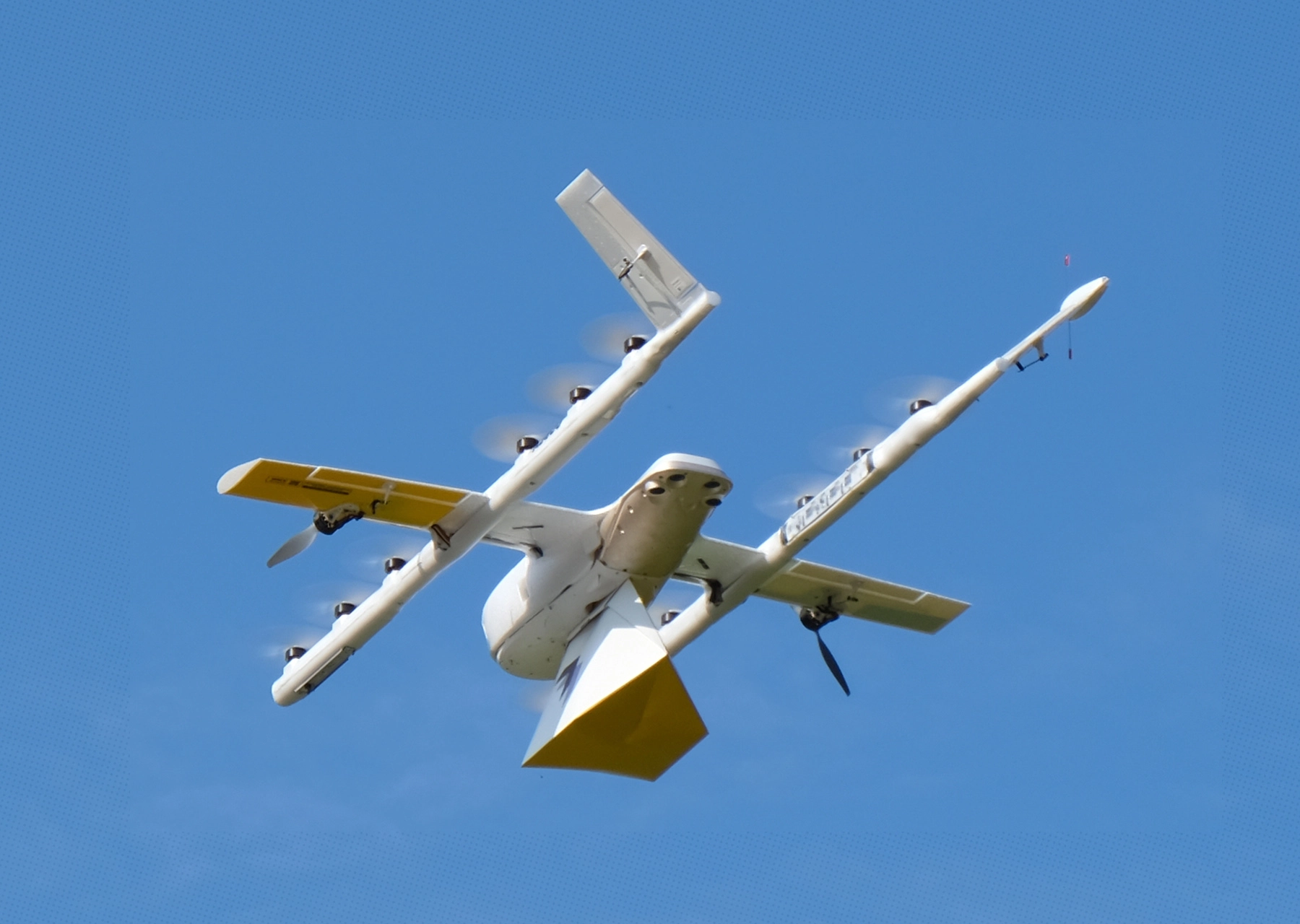
On October 27, 2026, KDDI, KDDI SmartDrone and Alphabet’s Wing signed an agreement to bring drone delivery to Japan [E1]. Wing brings its aircraft, flight operations and ground systems [E1]. KDDI brings a communications network and experience coordinating drone operations in Japan [E1]. The partners aim to deliver groceries and everyday goods, including products from Lawson convenience stores, in selected areas during 2027 [E1]. The first locations and the size of the fleet are still open questions.
The core unit-economics test starts with how many orders a single launch site can fill on an ordinary day, who is willing to pay for faster delivery, and what regulatory or retail work is required to open the next route. In Japan, Wing and KDDI will need store-level integration and municipal coordination before an initial site becomes part of routine household shopping.
What the operators report
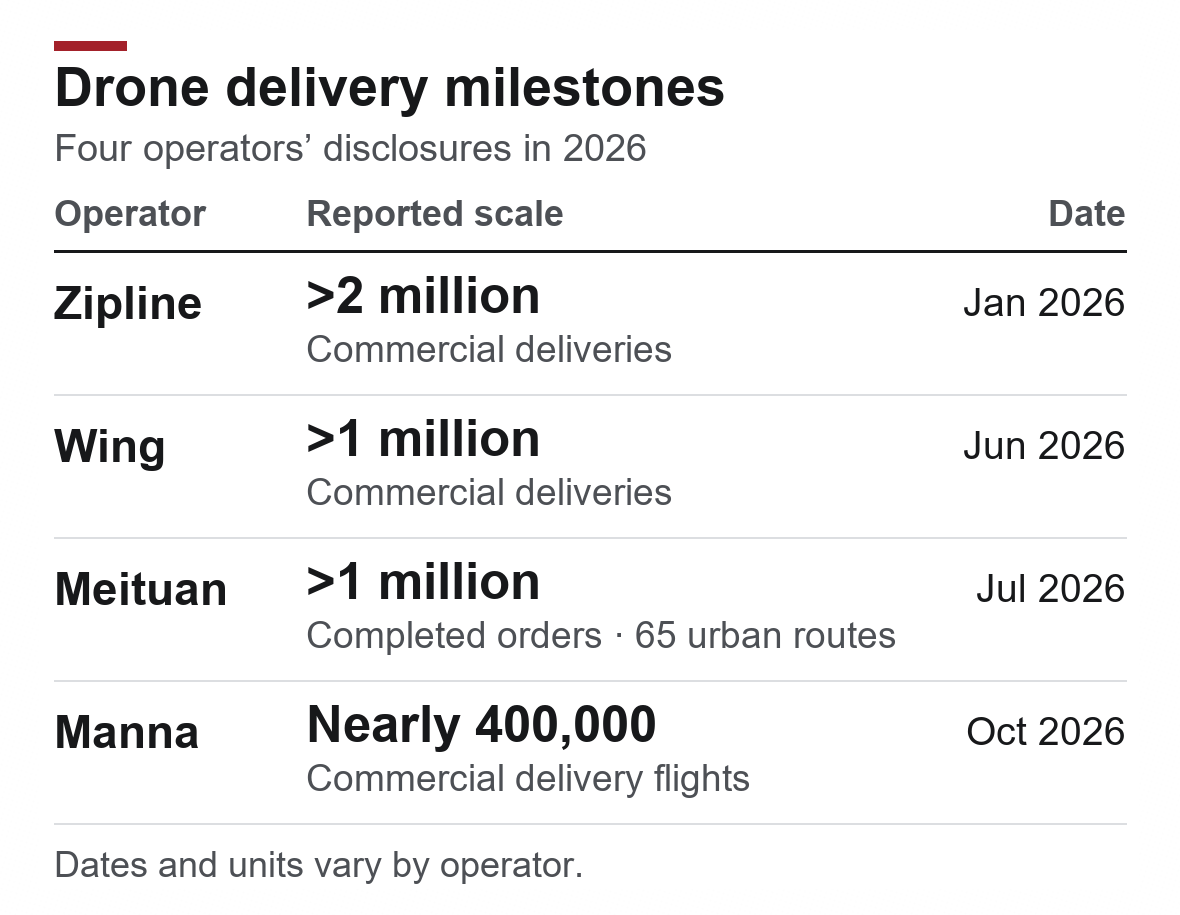
The companies count deliveries, orders and flights, and they reported at different times [E3][E5][E19][E20]. In May, Walmart reported a million drone deliveries across its own network, which then covered 66 stores in four states [E2]. Wing announced its own milestone in June [E3].
Zipline's disclosures illustrate how rapidly order volume can concentrate in one metro area. The company announced its millionth commercial delivery in April 2024 [E4] and passed two million about 21 months later [E5]. On November 5, 2026, it reported more than a million deliveries in the Dallas–Fort Worth area in that year alone [E6], alongside a US$1.5 billion funding round [E6] and a Walmart plan to add 300 delivery sites [E6][E7]. Dallas–Fort Worth shows peak single-market throughput; the 300-site rollout will test whether other markets reach similar density.
The costs on the ground
You can ask for a quote on a drone. It takes more work to price a year at a delivery site. Someone has to pay for the launch and handoff area, staff the operation, load packages, maintain equipment and coordinate flights. When the weather grounds the fleet, the customer still expects the order to arrive. A van or a courier may have to finish the job.
To estimate direct site costs per order, divide the site’s annual fixed costs by the number of completed orders and add the variable cost per order. Spread the cost of building the site over its useful life. Include the costs of aborted flights and orders that had to be sent out again. If the same site and crew can handle twice as many orders, the fixed cost per order falls by half. Once the operator needs another crew, more aircraft or a bigger site, the bill steps up again.
Headline cost-per-delivery claims require checking what line items are included: package preparation and handoff, site staff and lease costs, and full-year weather downtime rather than peak-afternoon averages. Comparing those line items against an equivalent ground-courier route—and tracking paid orders per site on a slow weekday—gives a realistic baseline.
Who will pay for the time saved?
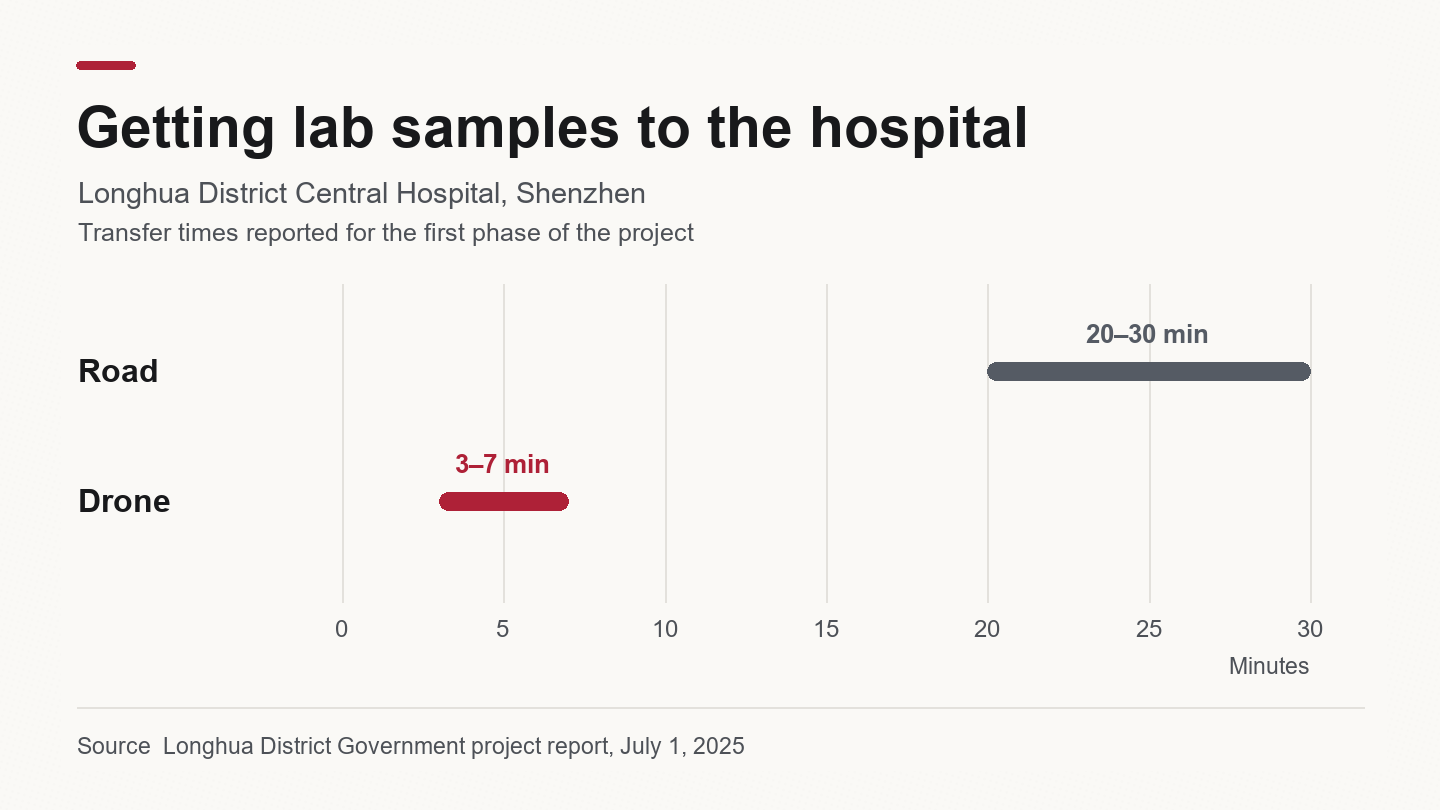
A lab sample makes it easier to see what a few minutes are worth. In Shenzhen’s Longhua district, the local government reported that five routes linking eight community health facilities cut lab-sample transfers from 20–30 minutes by road to 3–7 minutes by drone [E8]. A retrospective study in Rwanda recorded 12,733 blood product orders delivered by drone [E9]. It reported an average drone delivery time of about 50 minutes, 79 minutes faster than a baseline based on local estimates of road travel [E9]. The next questions are who pays for the service, how long payment takes and how much of the time saved translates into lower inventories, less waste or shorter waits.
A novel fast dinner drop can generate trial orders, but repeat demand depends on store packing speed, convenient customer handoff, and neighborhood acceptance of overflight noise. In August, Amazon said it was flying from 11 sites across 10 U.S. metro areas and aimed to reach nearly 500 cities and towns by year-end [E10]. Key operational indicators going forward are actual sites opened versus towns announced and daily order volume per site.
The first Japanese deployments will clarify which customer segment anchors early demand. Japan's agricultural policy research institute estimated that in 2020 about 9.04 million people aged 65 or older lived at least 500 meters from a qualifying food retailer and had difficulty using a car [E11]. That estimate frames the access gap, though whether drones serve those households depends on site siting, payload limits, and ordering ease—since areas with the highest access need can also have sparse order density.
Who can build a business around a route?
There’s work for local suppliers before the first drone takes off. The same customer needs a place to launch and hand over packages, a way to charge the fleet, spare parts and people who know how to keep it running. At a May industry event, Meituan showed a new handoff unit with a footprint of about 1.4 square meters [E12]. It also opened recruitment for authorized service providers, with ten already signed through an earlier round [E12]. For a local partner, an equipment sale pays once. The longer relationship depends on who installs it, keeps it running and gets paid for that work.
For investors and operators, replication speed hinges on how quickly each subsequent site wins regulatory clearance. In September, Japan's transport ministry issued the first IDs for recognized drone traffic management providers, including NTT DATA and KDDI SmartDrone [E13], covering services such as flight-plan coordination [E13], and has documented an area-based Level 4 trial in Goto, Nagasaki [E14]. In the U.S., rulemaking for routine BVLOS flights under Part 108 remained under federal review in early November [E15][E16].
What Matternet’s filing shows
Matternet unveiled its M3 drone in September [E17], while its quarterly filing illustrates early commercial revenue concentration [E18]. In the nine months through June 30, 2026, Matternet reported about US$256,000 in revenue and US$534,000 in cost of revenue company-wide, with a single customer accounting for roughly 80% of revenue [E18]. Alongside new hardware rollouts, contract renewals and customer diversification remain critical benchmarks.
Signals to watch next
KDDI and Wing plan to start with groceries and everyday goods, a segment that creates immediate ground-infrastructure demand even before consumer density matures. Equipment and service suppliers can start by outfitting an initial launch pad, then build recurring revenue through spare parts, crew training, and site maintenance as operators expand to additional hubs.
Across the sector, the strongest commercial footing belongs to operators winning recurring contracts on time-sensitive shipments—such as diagnostic lab samples or urgent spare parts—where speed commands a clear premium. Operators that pair repeatable site approvals with reliable on-time dispatch and rising orders per pad are best positioned to scale sustainable networks.