
Crossing above the 25-kilogram regulatory ceiling transforms every engineering and logistical parameter of unmanned flight. Scaling into heavy-payload operations forces fundamental redesigns across structural load paths, high-voltage current draw, and active underslung pendulum damping, while replacing portable battery kits with three-phase battery-generator field turnaround and special airworthiness approvals. Evaluating these operational trade-offs begins with the physical and regulatory boundaries of the platform.
What Is a Heavy-Lift Drone?
A heavy-lift drone is an engineering-grade unmanned aircraft defined by physical payload capacity rather than a single airframe geometry or commercial vertical. Across the unmanned aviation industry, heavy-lift payloads begin above 5 to 20 kg (11 to 44 lbs) and extend past 100 kg (220 lbs) on industrial and tactical rotorcraft. Because operational benchmarks vary by sector, procurement teams classify platforms by context: aerial cinema and geophysical surveying treat 5 to 15 kg of stabilized optics or sensors as heavy lift, whereas mountain rigging, agricultural application, and offshore supply reserve the term for aircraft hoisting 30 to 200 kg or more.
| Payload Tier | Payload Range | Typical Architecture & Powertrain | Mounting Interface | Ground Crew |
|---|---|---|---|---|
| Light Heavy-Lift | 5–20 kg (11–44 lbs) | High-voltage multirotor; electric | Rigid belly rail or gimbal | 1–2 operators |
| Medium Heavy-Lift | 20–100 kg (44–220 lbs) | Coaxial octocopter or helicopter; electric or hybrid | Cargo hook, winch, or tank | 2–3 crew |
| Ultra-Heavy-Lift | 100+ kg (220+ lbs) | Single- or tandem-rotor helicopter; piston or turbine | Certified sling hook or bay | 3+ specialists |
Assessing lift margin requires distinguishing payload capacity from empty operating weight—airframe, propulsion, avionics, and batteries or fuel—and Maximum Takeoff Weight (MTOW), the sum of empty weight and useful load. In procurement, MTOW marks a sharp regulatory cliff. Across major civil aviation regimes, including the 55-lb FAA Part 107 ceiling and the 25-kg EASA Open Category limit, exceeding standard small-aircraft thresholds triggers special airworthiness approvals or operational risk assessments, stricter airspace containment, overflight restrictions above uninvolved people, specialized pilot ratings, and higher liability insurance. Teams that specify airframes solely on lift capacity without accounting for MTOW gating routinely encounter multi-month approval delays before legal flight operations begin.
Core Engineering Characteristics of Heavy-Lift Platforms
Scaling a drone to heavy-lift capacity is never linear enlargement. Under the square-cube law, structural mass grows faster than rotor disk area, forcing fundamental redesigns across load paths, bus voltage, thermal dissipation, and flight control authority.
High Payload Fraction and Reinforced Airframe Structures
Delivering a viable payload fraction demands high structural stiffness at minimal dead weight along the primary load path. Heavy-lift platforms employ aerospace-grade carbon-fiber trusses or tubular booms anchored to CNC-machined aluminum central hubs, transferring peak thrust and asymmetric gust loads cleanly into the payload mount. To remain road-transportable, large multirotors use foldable arms fitted with positive mechanical locking collars that eliminate structural play and resonant vibration under high torque.
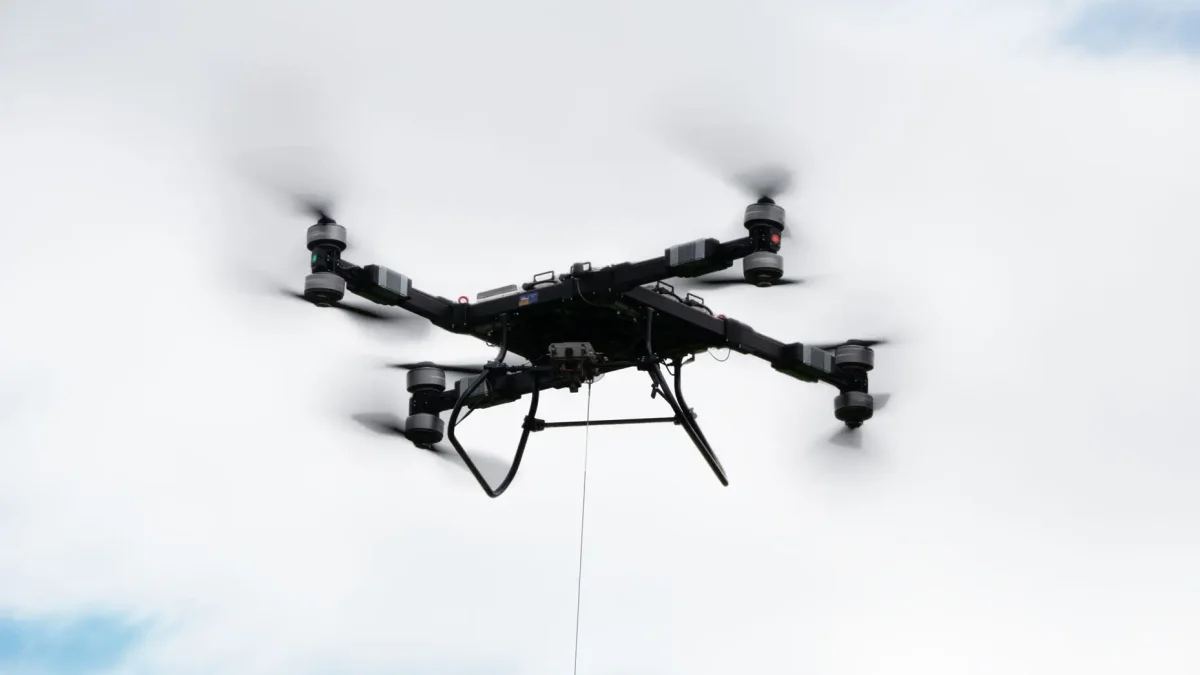
Mounting architecture splits cleanly between rigid belly interfaces and underslung sling loads. Rigid belly mounts—quick-release rails paired with elastomer or wire-rope isolators—bolt cinema gimbals, bathymetric sensors, or spray tanks directly to the aircraft's center of gravity (CG), preserving predictable rotational inertia and boresight alignment. Conversely, underslung cargo hooks and winches below the CG accommodate irregular construction loads and contactless deliveries in tight terrain, but introduce dynamic shock during pickup and instantaneous mass drops upon release. When a heavy load detaches in hover, the abrupt thrust-to-weight spike demands reinforced central mounts and rapid collective or throttle damping to prevent an uncontrolled climb.
Heavy-Duty Propulsion: High-Voltage Electric, Hybrid, and Turbine/Piston Options
As hover power climbs into tens of kilowatts, electrical current management becomes a defining engineering constraint. Electric heavy lifters step up system bus voltages—typically 12S to 24S or higher DC architectures—to reduce amperage for a given power draw. Lower current curbs resistive heating losses across distribution boards and harnesses, trims copper conductor weight, and eases thermal loads on electronic speed controllers driving high-torque brushless motors and large carbon propellers. Coaxial octocopter (X8) electric drives excel at short-range, high-frequency lifts where instant torque response and mechanical simplicity outweigh 10-to-25-minute full-load flight times.
When missions require sustained hover or multi-kilometer transit beyond pure-battery limits, operators turn to hybrid-electric range extenders or direct fuel-burning propulsion. Hybrid architectures pair onboard combustion generators with buffer batteries that absorb peak takeoff and gust loads while extending endurance. In the heaviest tiers, piston and gas-turbine unmanned helicopters dominate by combining hydrocarbon fuel energy density with large, low-disk-loading main rotors to sustain multi-hour heavy sorties where batteries would consume the entire payload margin.
Redundancy, Swing-Damping Flight Control, and Emergency Safety
High kinetic energy requires layered fault tolerance across propulsion and avionics. Coaxial multirotors and dodecacopters retain deliberate thrust margins to sustain controlled hover and land safely after a single motor, speed controller, or propeller failure. Triple-redundant flight controllers, isolated power buses, and dual-antenna RTK GNSS receivers provide compass-independent heading stability—critical when rigging steel components near energized transmission towers or iron-rich terrain.
Underslung payloads introduce unactuated pendulum degrees of freedom beneath the CG; mountain gusts or sharp decelerations can excite lateral sway that destabilizes attitude loops. Heavy-lift flight controllers counter this through active swing-damping (anti-sway) control laws that model sling angle and inject counter-phase lateral corrections to bleed off oscillation. Against snagged lines, severe wind shear, or total power loss, platforms integrate motorized auto-release hooks and emergency jettison mechanisms to drop entangled loads instantly, backed by heavy-duty pyrotechnic ballistic parachutes and independent flight termination systems that enforce safety perimeters.
Airframe Geometries Used for Heavy Lifting
Heavy-lift capability spans several airframe geometries, each trading hover efficiency against footprint and cruise range. Coaxial multirotors—most notably X8 octocopters and dodecacopters—stack counter-rotating rotors on each arm to double thrust within a compact footprint. Although coaxial airflow interference modestly lowers aerodynamic efficiency relative to single-plane layouts, the tight geometry enables operations from steep mountain pads and truck beds while retaining solid-state propulsion reliability and rapid folding.
Single-rotor and tandem-rotor unmanned helicopters deliver the highest vertical-lift efficiency. Sweeping a much larger rotor disk at lower disk loading allows collective-pitch helicopters to generate far more lift per kilowatt than multirotors, enabling superior payload fractions and multi-hour endurance with piston or turbine engines. Their penalty is mechanical complexity: swashplates, gearboxes, and rotor hubs demand strict maintenance schedules and higher acquisition budgets.
For long-range point-to-point transport, large composite-wing VTOL and fixed-wing aircraft transfer lift to aerodynamic wings in cruise, carrying heavy loads efficiently between remote airstrips or coastal hubs. Because winged designs sacrifice sustained hover stability, however, they cannot replace rotorcraft for precision aerial crane rigging over confined sites.
Common Industrial, Agricultural, Media, and Defense Applications
Operational missions impose contrasting mechanical and avionics priorities across heavy-lift platforms, dividing rugged external-load lifters from vibration-isolated instrument carriers.
Mountain Rigging, Construction Lifting, and Remote Cargo Logistics
Short-haul, cyclic vertical rigging—widely operated as an unmanned aerial crane—is among the fastest-growing commercial roles for heavy coaxial multirotors and unmanned helicopters. On steep alpine solar farms, wind sites, and transmission tower builds, shuttling photovoltaic panels, steel hardware, insulators, or concrete mortar directly from valley staging yards avoids cutting temporary access roads or deploying mule trains. Comparable aircraft perform ship-to-shore and offshore platform resupply, moving urgent spares across rough terrain or open water without exposing crewed helicopters to marginal weather.
High-Capacity Agricultural Spraying, Spreading, and Forestry Seeding
Large-scale agricultural platforms require corrosion-resistant structures built to cycle tens to over one hundred liters of liquid inputs or granular fertilizer across thousands of seasonal sorties. Rather than chasing long single-flight endurance, these systems emphasize rapid refills, high-flow pumps or centrifugal spreaders, and terrain-following radar to maintain uniform swath height. While dedicated crop sprayers form a specialized commercial vertical, similar heavy-payload spreading rigs increasingly support mountainous forestry programs by delivering containerized tree seedlings and soil treatments across steep, burned slopes.
Heavy Sensor Integration (ALB LiDAR, Magnetometers, GPR) and Cinema Rigs
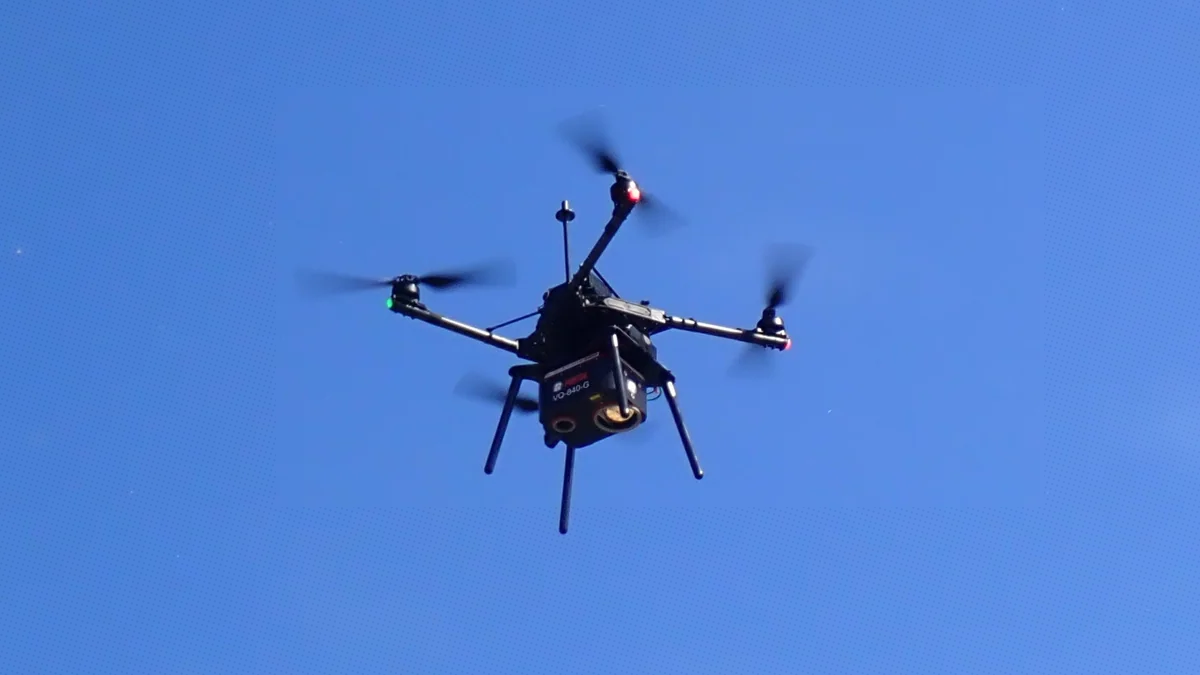
Geophysical surveying and motion-picture production rely on heavy-lift aircraft for ultra-stable carriage of bulky, high-value payloads rather than raw cargo tonnage. Dual-wavelength airborne bathymetric LiDAR (ALB), towed or boom-mounted magnetometers, ground-penetrating radar (GPR), and contact-based inspection manipulators frequently weigh 10 to 30 kg while requiring substantial auxiliary power and electromagnetic shielding. Likewise, cinema-grade camera packages with heavy prime lenses and three-axis gyro-stabilized gimbals depend on rigid, CG-centered belly mounts and low-vibration multirotor damping for fluid, broadcast-ready aerial cinematography.
Tactical Resupply, CASEVAC Research, and High-Volume Fire Suppression
Defense and emergency agencies deploy heavy-lift unmanned aircraft to keep personnel out of contested or hazardous airspace. Autonomous helicopters and large multirotors resupply forward units with ammunition, rations, batteries, and medical kits without endangering manned convoys, while experimental ultra-heavy rotorcraft programs evaluate uncrewed casualty evacuation (CASEVAC). In public safety, heavy lifters haul high-volume extinguishing canisters or pressurized hoses onto high-rise facades and steep wildfire ridgelines, complementing specialized aerial firefighting fleets.
Operational Logistics, Ground Support, and Total Cost of Ownership
Buyers frequently underestimate the ground ecosystem needed to keep a heavy-lift fleet productive. Unlike portable inspection drones carried in cases, 50-to-150-kg platforms require pickup trucks, cargo vans, or enclosed box trailers fitted with securing frames and ramps. Field work also increases staffing: safe sling rigging typically mandates at least a two-person crew, pairing a flight operator with a ground rigger handling hook attachment, tension checks, and drop-zone safety.
Field energy replenishment represents the sharpest hidden operating cost for electric heavy lifters. High-frequency mountain rigging depletes multi-kilowatt-hour battery packs every 10 to 20 minutes on grid-free sites, requiring trailer-mounted, high-output three-phase fuel generators, liquid-cooled rapid charging stations, and rotating battery sets. Because sustained high-C-rate discharge and rapid recharge cycles accelerate lithium cell aging, battery pack depreciation often rivals airframe amortization in total cost of ownership, narrowing lifecycle cost gaps against fuel-burning unmanned helicopters on high-utilization contracts.
Common Synonyms, Related Terms, and Category Boundaries
Across procurement specifications and aviation filings, heavy-lift drones appear as heavy-lift UAVs or UAS, heavy-payload drones, unmanned aerial cranes, and autonomous cargo rotorcraft or helicopters. Clear category boundaries prevent costly specification errors during fleet planning. Heavy-lift drones are defined by physical lifting capability and multi-mission versatility—spanning heavy scientific sensor mounts, underslung construction rigging, high-volume spraying, and tactical external loads across field-deployable vertical-lift platforms. By contrast, dedicated cargo drones address point-to-point freight logistics through enclosed holds, standardized containers, or runway-launched ton-class converted fixed-wing freighters on scheduled regional routes, while delivery drones handle lightweight, automated last-mile parcel drops directly to urban or suburban recipients.