
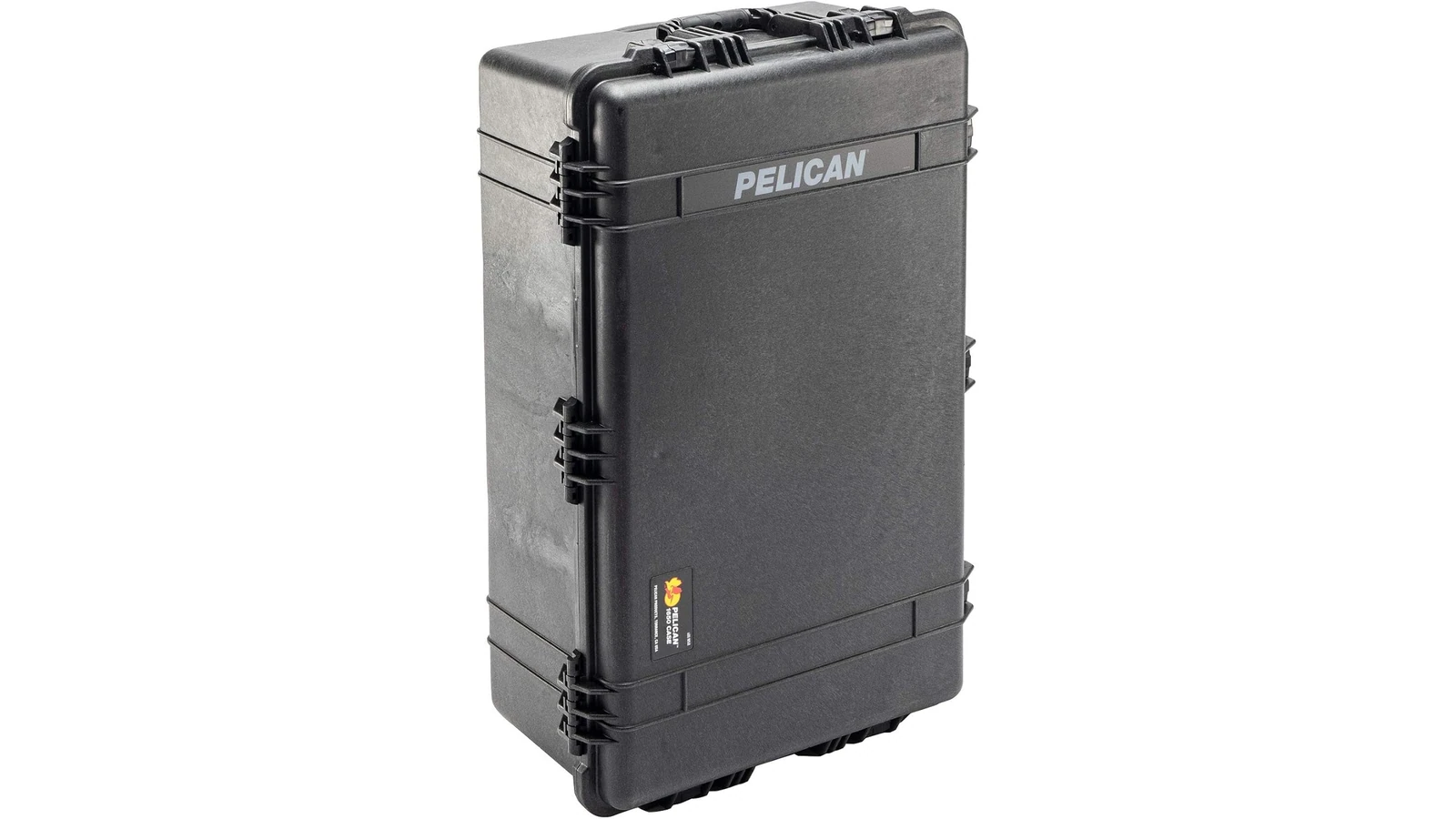
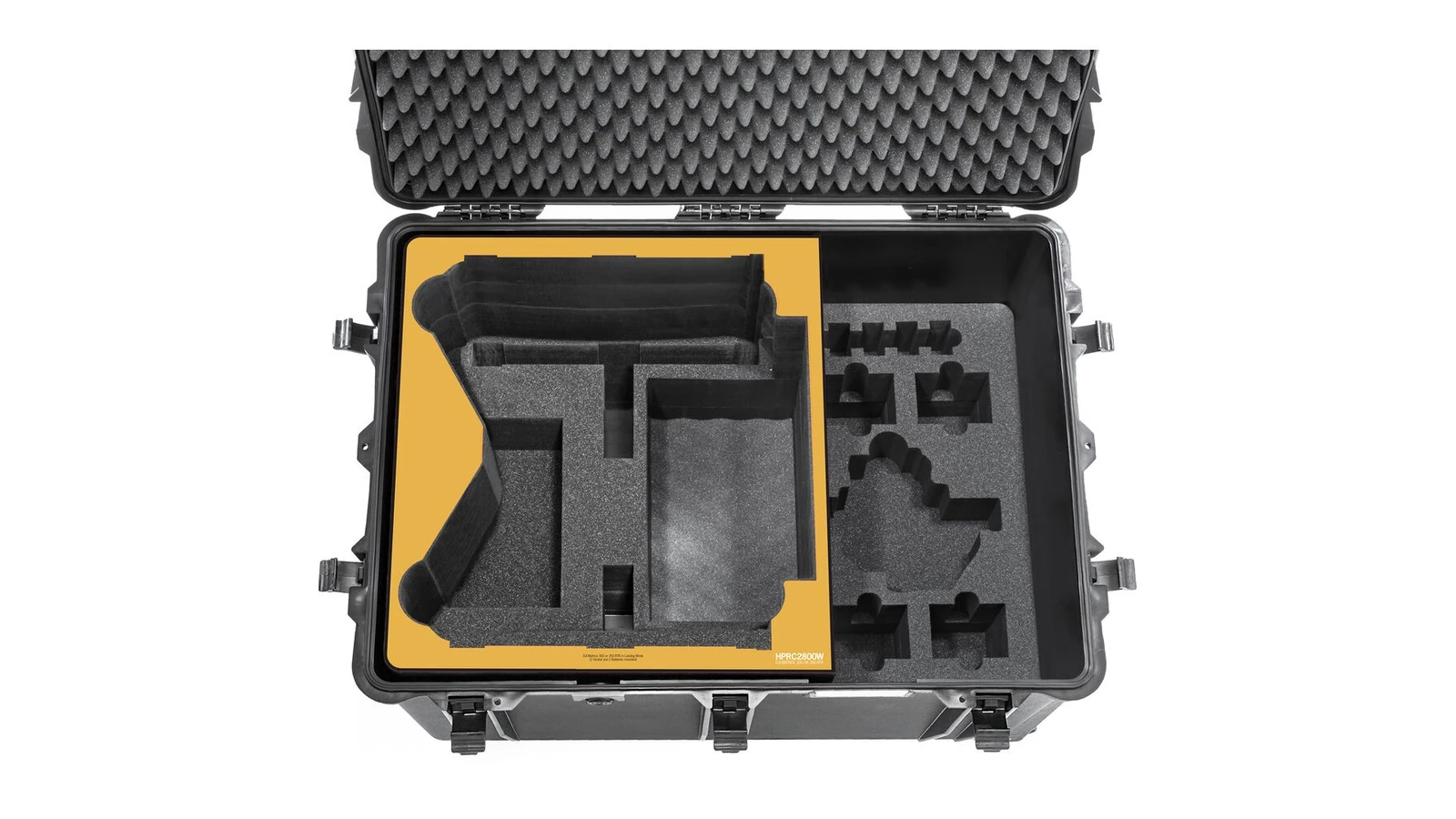
Moving from makeshift storage to purpose-built hardware transforms logistics from a point of failure into operational insurance. Engineered transit trunks with closed-cell milled cavities, active lid-closed field charging hubs, and certified thermal-runaway containment enclosures ensure sensitive airframes, payloads, and power systems arrive calibrated, compliant, and ready for immediate deployment.
What Is a Drone Carrying Case?
A drone carrying case is a purpose-engineered transport, field-deployment, and battery-safety enclosure designed to isolate an unmanned aerial vehicle, its ground controller, flight batteries, chargers, and delicate payloads from mechanical shock, vibration, dust, and moisture. While basic sleeves address casual portability, commercial and defense UAV programs rely on engineered protective cases to safeguard integrated platforms whose combined airframe and sensor value routinely reaches tens or hundreds of thousands of dollars.
In enterprise operations, costly hardware failures often originate on the ground rather than in flight. Unchecked low-frequency resonance in a utility pickup bed or sharp drop impulses during air freight handling inflict latent internal trauma on precision multi-axis gimbals, LiDAR scanners, and oblique photogrammetry cameras. These impacts induce gimbal axis misalignment, optical lens defocus, and electronics fatigue long before visible fractures appear. Beyond impact attenuation, custom-milled cavities organize propellers, fasteners, and calibration tools into dedicated slots so field crews can confirm complete equipment recovery in seconds, preventing missing-tool errors and foreign object debris hazards around active launch zones.
Main Case Categories and Shell Construction
Selecting an enclosure requires balancing tare weight, structural rigidity, ingress sealing, and lifecycle economics against mission logistics. Distinct shell manufacturing processes yield markedly different impact and environmental characteristics, as compared below.
| Enclosure Architecture | Tare Weight | Corner & Drop Impact Resistance | Ingress Sealing | Primary Fit & Tooling Profile |
|---|---|---|---|---|
| Injection-Molded Copolymer Polypropylene | Light–moderate | High elasticity; crack-resistant | High (IP67) | Single-operator air travel and field kits; high mold cost for standard footprints |
| Rotomolded Polyethylene | Heavy | Very high; thickened corners | Moderate–high (IP65–IP67) | Heavy-lift or segmented fixed-wing trunks; economical low-volume custom molds |
| Welded Aluminum Transit Case | Moderate–heavy | Rigid; thermally stable | Moderate (IP54–IP65) | Military logistics, EMI-sensitive payloads, extreme climates; sheet fabrication |
| Semi-Rigid Tactical Backpack | Very light | Moderate crush protection | Low–moderate (weatherproof) | Alpine survey, forestry search, and dismounted reconnaissance |
Rugged Hard Cases and Heavy-Duty Shipping Trunks
Hard-shell enclosures anchor commercial and tactical UAV logistics across three primary constructions. High-pressure injection-molded copolymer polypropylene cases deliver a strong strength-to-weight ratio for enterprise multirotors and medium tactical airframes. Structural exterior ribs, telescoping tow handles, and recessed wheels allow a single operator to transport a complete flight kit through commercial terminals and across job sites without specialized lifting gear.
For heavy-lift multirotors, agricultural aircraft, or disassembled fixed-wing platforms, fleet managers specify rotationally molded polyethylene shipping trunks. Because rotational molding forms stress-free walls that naturally thicken along exterior edges and corners, rotomolded trunks absorb severe corner drops, forklift impacts, and heavy pallet stacking while remaining economical for oversized custom footprints. Where missions involve military logistics, extreme desert or arctic temperatures, or avionics needing electrostatic dissipation and electromagnetic shielding, welded aluminum transit cases provide unmatched dimensional rigidity. Unlike thermoplastics that soften under intense heat or stiffen in sub-zero conditions, aluminum preserves structural geometry and resists puncture across demanding multi-year deployments.
Tactical and Field-Survey Drone Backpacks
Wheeled hard trunks lose practicality once operations move beyond drivable roads. For alpine topographic mapping, forestry search and rescue, pipeline patrols, and dismounted reconnaissance, crews deploy tactical and field-survey drone backpacks. Rather than relying on soft fabric partitions, industrial packs pair an ergonomic load-bearing harness—featuring padded hip belts, load lifters, and ventilated back panels—with an internal thermoformed semi-rigid skeleton. This hybrid structure transfers load weight off the shoulders during steep ascents while shielding folded arms and delicate camera gimbals from external crush forces, brush impacts, and vehicle-cargo compression. Abrasion-resistant outer fabrics, sealed zippers, and integrated rain covers defend against mountain squalls without adding hard-case bulk.
Soft Bags, Sling Bags, and Compact Component Cases
Short-range infrastructure inspections and routine utility patrols frequently employ folding, lightweight airframes carried inside a service truck cab rather than cargo holds. Soft padded bags and sling packs streamline this rapid-access workflow by prioritizing compact stowage and fast deployment over freight-grade armor. Equally essential in modular enterprise fleets are compact, standalone component cases built to isolate decoupled high-value payloads. Because industrial platforms rely on quick-release mounts, crews routinely transport standalone LiDAR sensors, optical zoom cameras, and thermal imaging gimbals separately from the main airframe trunk—enabling airline carry-on transit or cross-fleet payload sharing without exposing precision optics to heavy airframe components.
Specialized Functional Cases: Charge-in-Case Power Hubs and Lithium-Battery Fire Containment
Industrial UAV programs increasingly adopt specialized active and safety-rated functional cases alongside passive transport trunks. Integrated lid-closed AC field charging cases convert a rugged wheeled enclosure into a mobile power hub. Built with weather-resistant external power inlets, internal charging buses, ducted active cooling fans, and automated thermal cutoffs, these enclosures recharge six to eight or more high-capacity flight batteries concurrently without removing packs from their foam bays. Enabling safe closed-lid charging in rain, dust, or cramped staging areas minimizes connector wear and dramatically shortens turnaround between survey sorties.
Equally critical are dedicated lithium-battery fire-containment cases engineered for hazardous-materials transport. High-energy lithium-polymer and lithium-ion packs present severe thermal-runaway risks during transit or post-incident recovery. Purpose-built containment enclosures pair reinforced outer shells with internal fiberglass thermal barriers, vermiculite absorption liners, and multi-stage particulate and gas filtration vents. Engineered to satisfy UN 3480, IATA Dangerous Goods, and ADR transport packaging requirements, these containers suppress flame spread, capture molten ejecta, filter hazardous smoke particulates, and safely relieve internal pressure spikes before a cell failure can compromise surrounding cargo or vehicles.
Interior Cushioning, Ingress Ratings, and Aviation Shipping Standards
A rugged shell fails its protective mandate without properly engineered internal cushioning. Budget carrying cases often use open-cell polyurethane pick-and-pluck sponge, which introduces severe operational hazards for professional UAV equipment. Open-cell sponge readily absorbs rain, coastal humidity, and condensation, trapping moisture directly against metal fasteners, connectors, and avionics to accelerate corrosion. Over time, polyurethane sponge oxidizes and sheds fine abrasive crumbs that infiltrate brushless gimbal bearings, cooling intakes, and optical coatings. Heavy airframes and dense battery packs also cause rapid permanent compression set, flattening the sponge so hardware bottoms out violently against the outer shell during routine road bumps.
Industrial carrying cases replace open-cell sponge with closed-cell cross-linked polyethylene (XLPE) or high-density EVA foam precision-cut via CNC milling or abrasive waterjet systems. Because XLPE features sealed micro-cells, it resists water absorption, hydraulic oils, and field solvents, sheds zero particulate debris, and retains elastic rebound under sustained heavy loads. Packaging engineers tailor cavity geometry and foam density to each platform's fragility profile, frequently cutting deploy-ready gimbal-mounted cavities that let airframes travel fully assembled with sensors attached—eliminating error-prone field reassembly. Bonding a high-contrast colored lower foam sheet beneath dark upper cavities establishes an aviation-style shadow board: any missing propeller wrench, memory card, or spare battery immediately stands out during pack-up.
External environmental sealing relies on continuous elastomeric perimeter O-ring gaskets compressed by rugged draw latches, qualifying cases to IP67 standards against complete dust ingress and temporary water immersion. Reinforced stainless-steel padlock hasps further deter tampering during commercial transit. A critical yet often underestimated structural component is the automatic barometric pressure-purge valve. When an airtight case descends from a low-pressure aircraft cargo hold or high-elevation survey ridge, rising exterior atmospheric pressure can create a severe vacuum lock that seals the lid shut against manual opening. A pressure-purge valve incorporates a hydrophobic microporous membrane that allows air molecules to equalize continuously while blocking water droplets and dust, ensuring effortless lid opening at any altitude.
To verify mechanical survivability objectively, enterprise buyers specify recognized transit certifications. ATA 300 establishes commercial airline reusable container durability across drop, puncture, and handling cycles. MIL-STD-810 defines rigorous qualification testing for transit drops, loose-cargo vibration spectra, blowing rain, salt fog, and thermal cycling, while STANAG specifications address allied defense interoperability and field resilience. Matching certification tiers to real transport stresses secures reliable protection without imposing unnecessary empty case weight.
Common Usage Examples Across Logistics and Field Operations
Commercial Air Travel, Freight Forwarding, and Cross-Border Shipping
Moving industrial UAV fleets via commercial airlines or international freight forwarders demands a disciplined split-case strategy. Because aviation regulations prohibit high-capacity spare lithium batteries from traveling inside checked baggage alongside the aircraft, field teams pack the airframe, controller, and accessories into a primary hard trunk carefully sized beneath airline oversize linear-dimension and gross-weight thresholds. Flight batteries travel separately inside UN 3480 and IATA Dangerous Goods compliant fire-containment packaging through approved cargo channels or permitted cabin allowances. Aligning outer case footprints with standard freight dimensions minimizes oversize surcharges, cargo rejections, and cross-border customs friction.
Harsh Fieldwork, Offshore Decks, and Construction and Mining Job Sites
Active job sites subject protective enclosures to harsh secondary hazards well beyond transit. On offshore wind platforms, marine vessels, and open-pit mines, cases sit in driving rain, abrasive mud, and corrosive salt spray, making marine-grade stainless-steel latches, hinge pins, and wheel axles essential against seizure. In austere terrain, flat reinforced case lids double as clean, elevated takeoff and landing pads over mud or loose gravel, shielding motors and optics from rotor downwash debris while serving as shaded portable work surfaces. Extending this mobile workstation utility further, specialized case integrators also manufacture rugged case-integrated ground control stations by embedding dual high-brightness industrial monitors, embedded compute modules, and telemetry interfaces directly into upper and lower shell halves. Operators simply unlatch a single weatherproof enclosure to establish immediate field command without assembling fragile peripheral gear.
Fleet Depot Organization, Vehicle Racking, and FPV or Recreational Portability
Between deployments, carrying cases structure day-to-day asset control inside utility vehicles and centralized fleet depots. Molded interlocking stacking ribs on lids and bases prevent lateral sliding, allowing technicians to strap modular multi-aircraft kits securely inside service trucks or align them uniformly across warehouse racking. Standardized external asset tags paired with internal shadow-board cavities streamline pre-mission checkouts and post-flight audits across rotating crews. At the lightweight end of the usage spectrum, soft padded bags, compact sling packs, and backpacks with external quick-mount straps serve outdoor recreational flyers and agile FPV pilots whose workflows prioritize rapid foot mobility and minimal carry weight over freight-grade armor.